
History of Building Codes
The rules behind today's building permits go back almost 4,000 years.
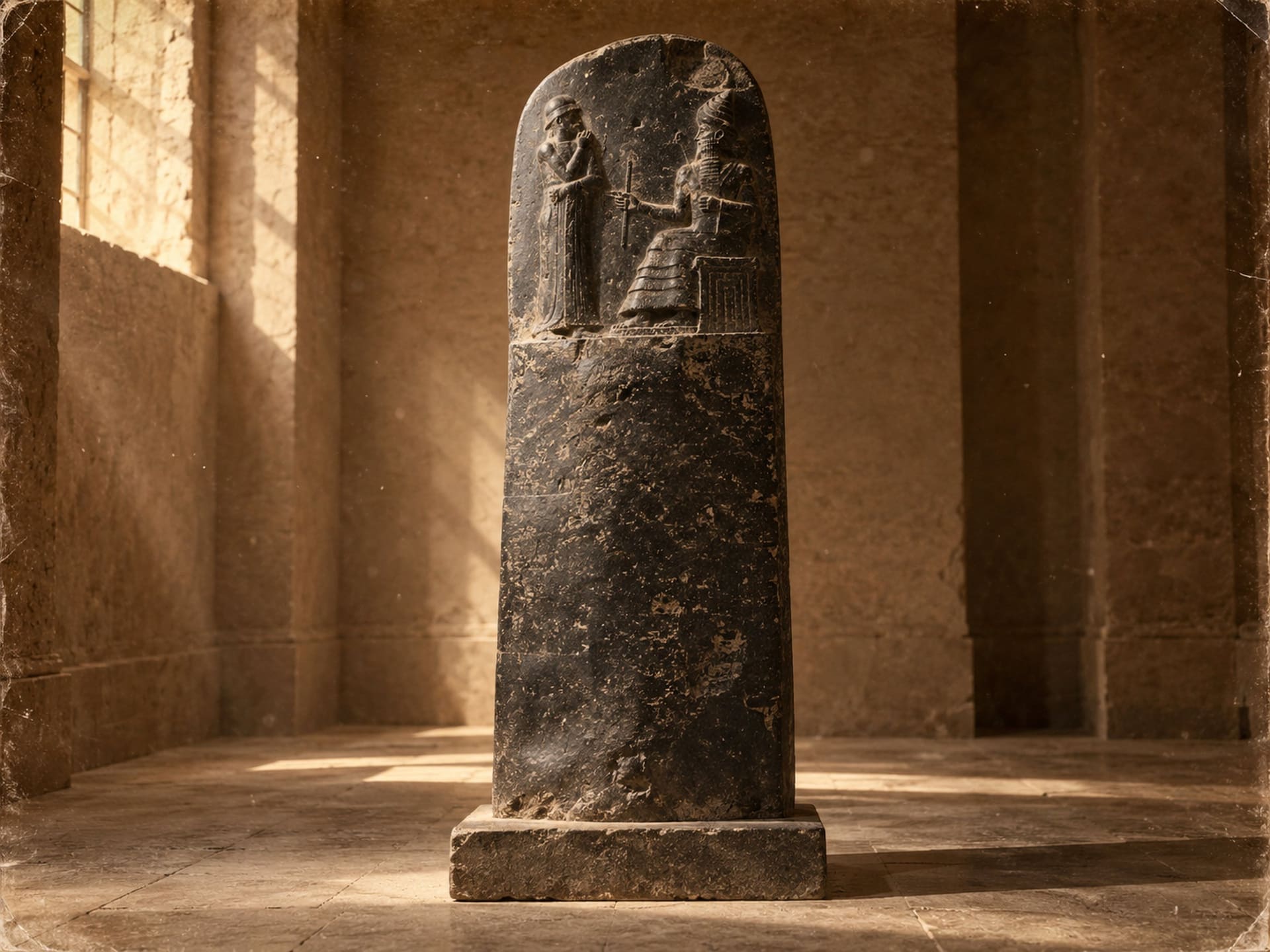
About 1750 BC:The Code of Hammurabi
King Hammurabi of Babylon wrote one of the oldest sets of laws we still have, and some of them were for builders. If a badly built house fell down and killed the owner, the builder could be put to death. If the walls started to lean before the job was finished, the builder had to make them solid with his own money.
Source: The Avalon Project, Yale Law School (laws 229–233) (opens in a new tab); Louvre Museum (opens in a new tab)
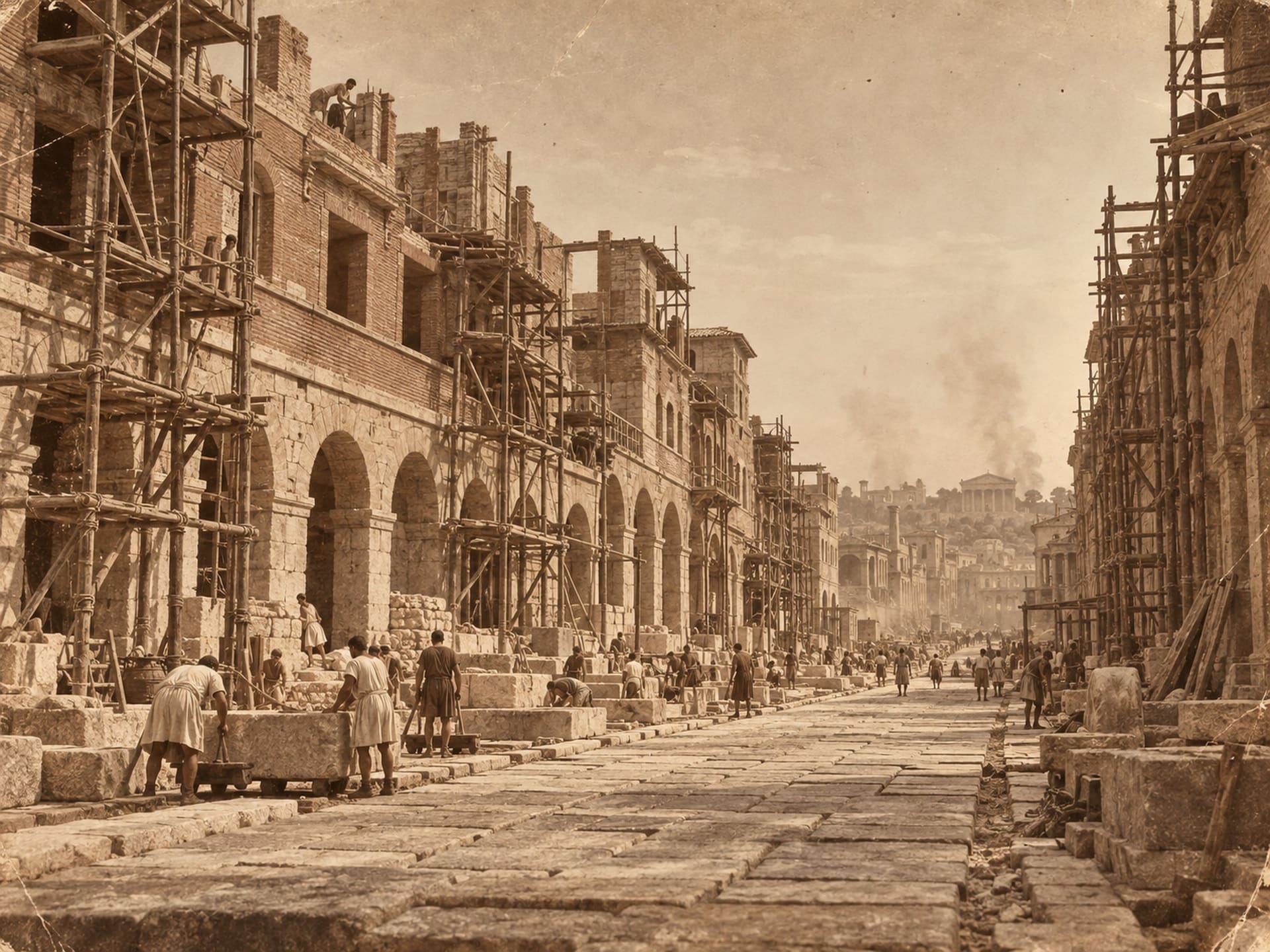
AD 64:Rome rebuilds after the Great Fire
After a great fire burned much of Rome, Emperor Nero set rules for the new city. Streets had to be wide, buildings could not be too tall, and walls had to be made of stone that does not burn. Each building also needed its own walls instead of sharing one with the house next door.
Source: Tacitus, Annals, Book 15, Chapter 43 (opens in a new tab)
1631:Boston bans thatched roofs
After a chimney fire burned down two houses in Boston, the colony ordered that no one could build a chimney of wood or cover a house with thatch.
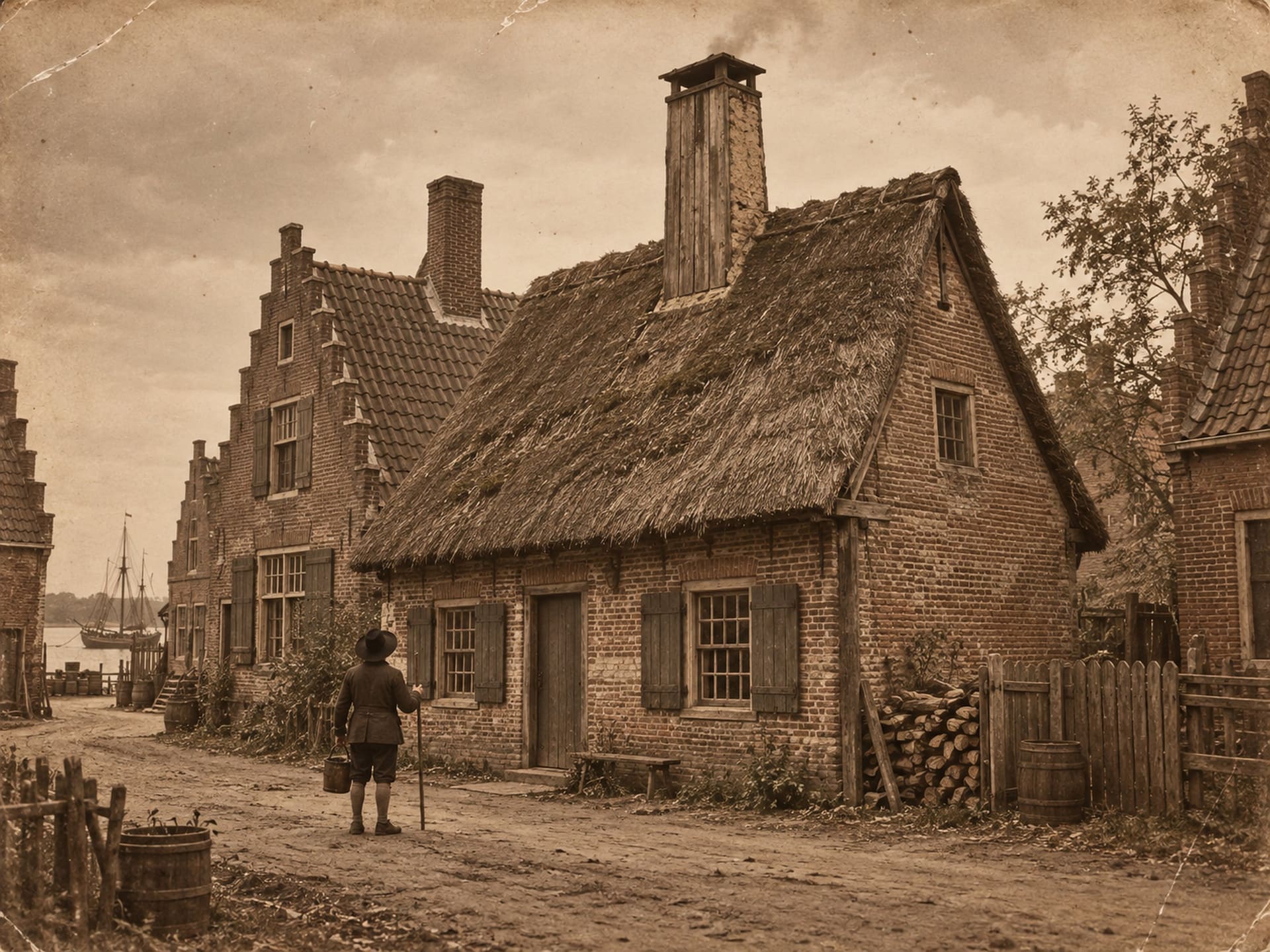
1648:New Amsterdam bans wooden chimneys
In New Amsterdam, the Dutch town that grew into the City of New York, Governor Peter Stuyvesant named four fire wardens. They walked the town and checked homes for wooden chimneys and thatched roofs, which caught fire easily.
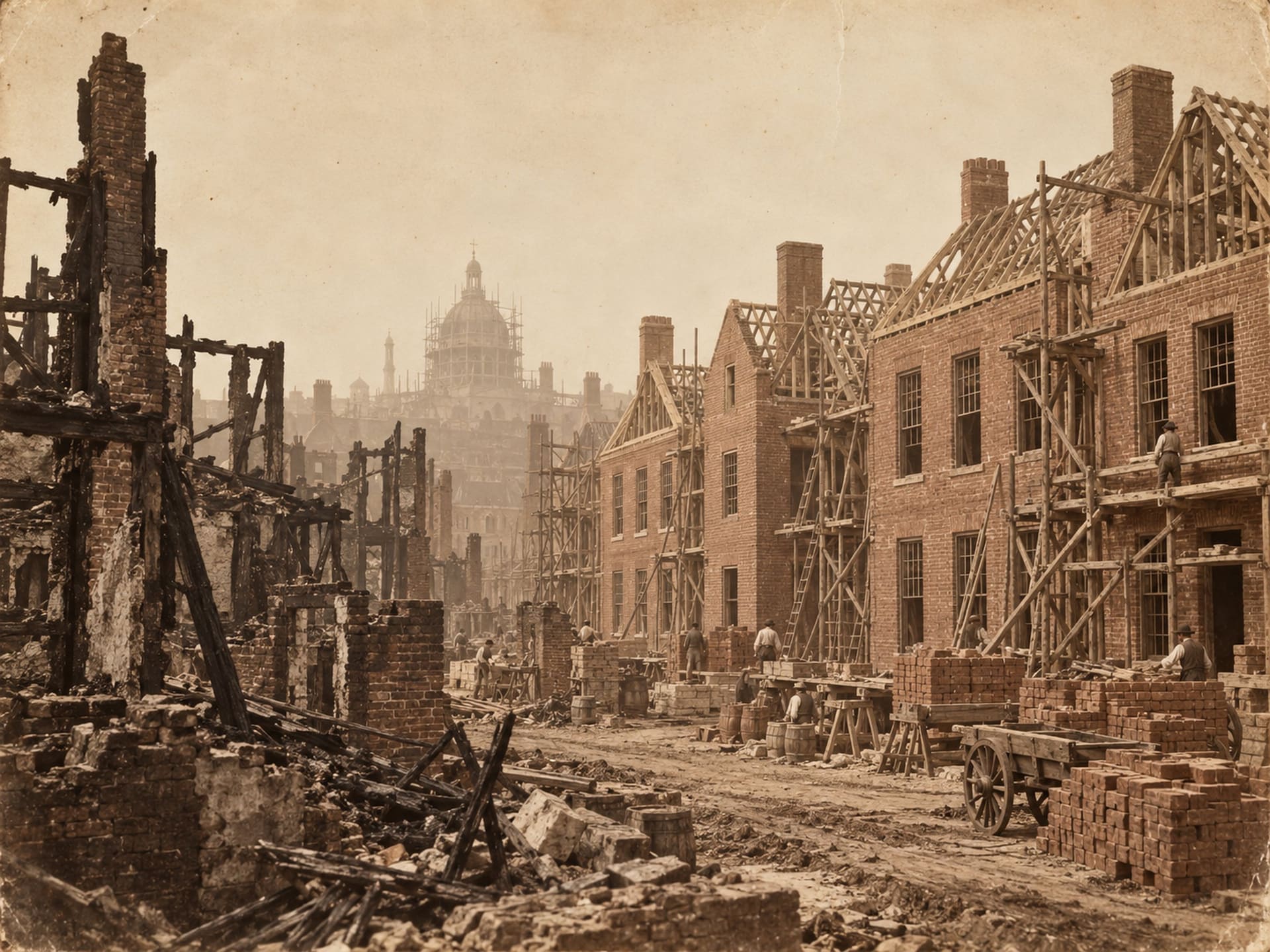
1667:London rebuilds in brick
After the Great Fire of London in 1666, Parliament passed a law for rebuilding the city. New houses had to be built of brick or stone instead of wood, and surveyors were chosen to stop buildings that broke the rules.
Source: Rebuilding of London Act, legislation.gov.uk (opens in a new tab)
1683:Boston's brick and stone law
A new law said every house, shop and barn built in Boston had to be brick or stone, but most people ignored it.
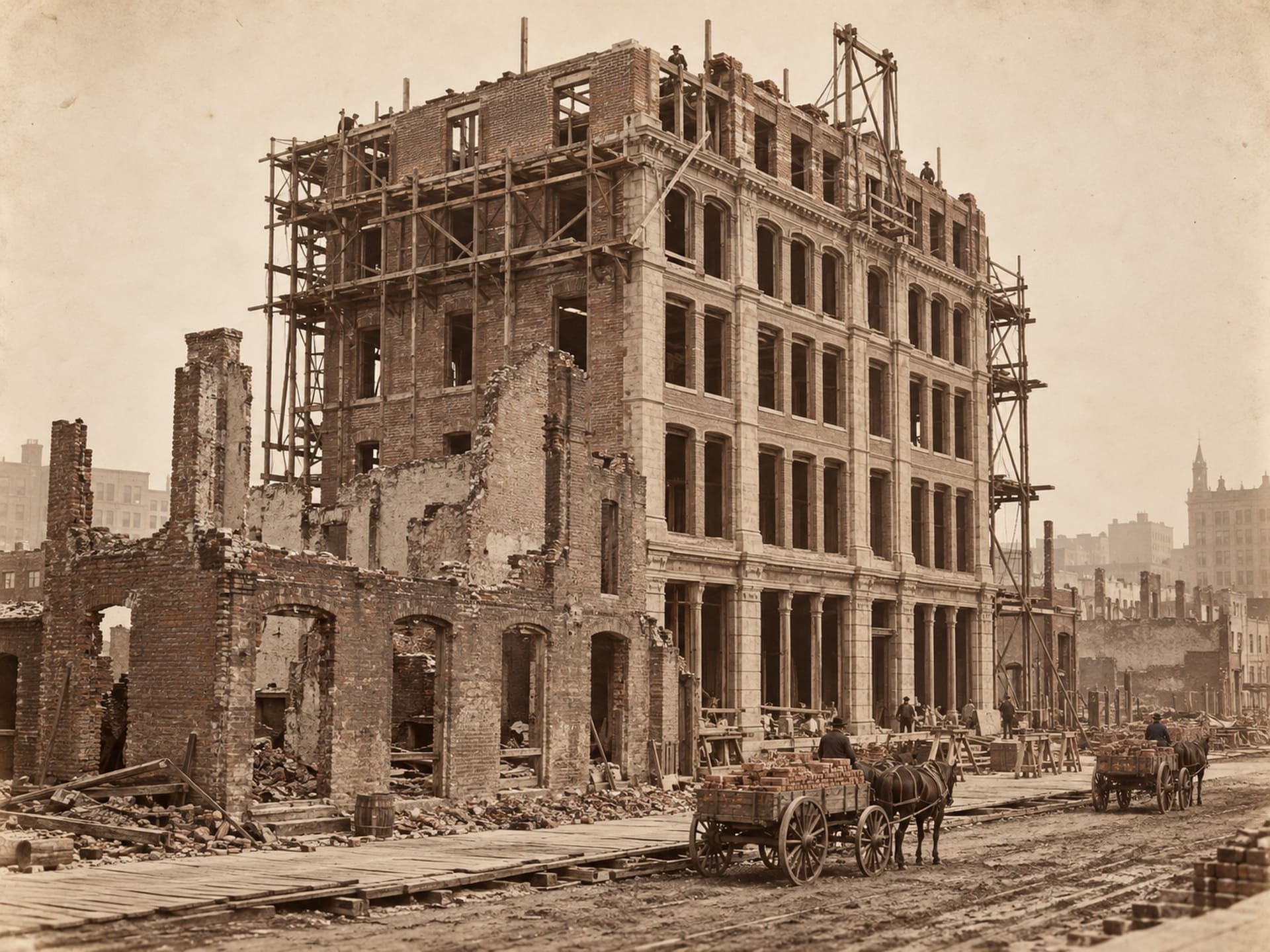
1874:Chicago bans wooden buildings
Chicago had fire limits since 1845, areas where new buildings had to be brick or stone. After the Great Chicago Fire of 1871, the city banned new wooden buildings downtown, but much of the city could still build with wood. After another large fire in 1874, the fire limits were extended to the whole city.
Source: Chicago Public Library (opens in a new tab); Encyclopedia of Chicago (opens in a new tab); Wikipedia (opens in a new tab)
1897:The first National Electrical Code
The first national set of rules for electrical wiring came out in 1897. A new edition still comes out every three years.
Source: Wikipedia (opens in a new tab)
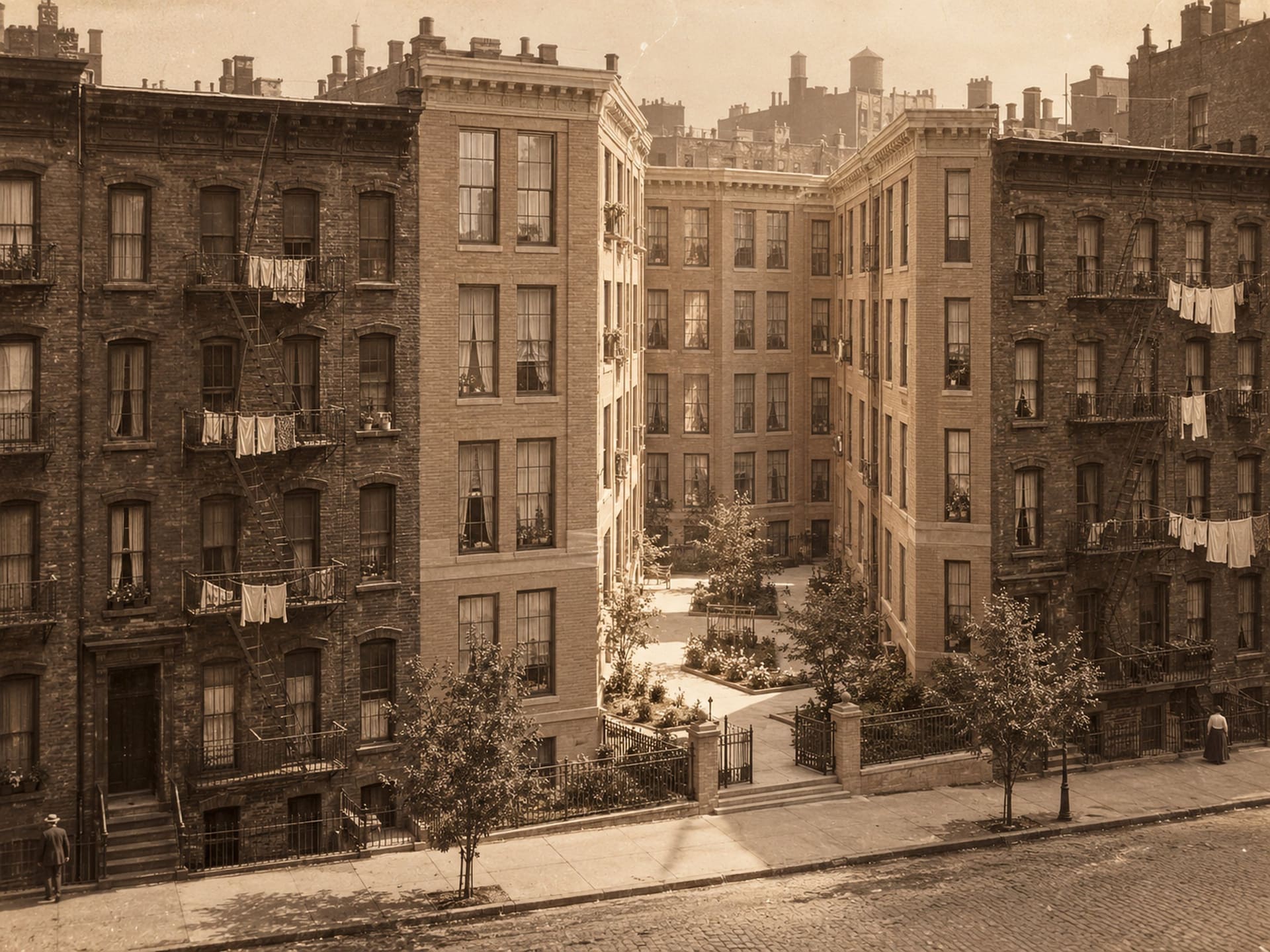
1901:New York's Tenement House Act
Many New Yorkers lived in crowded, dark apartment buildings called tenements. The Tenement House Act of 1901 banned living spaces with no windows and made new buildings include indoor bathrooms, better light, fresh air and fire safety.
1903:Exit doors that open outward
A fire at the Iroquois Theater in Chicago killed 602 people, and many could not get out because the exit doors opened inward. Afterward, cities across the country required exit doors in public buildings to open outward, and push bars on exit doors became common.
Source: Encyclopedia of Chicago (opens in a new tab); Wikipedia (opens in a new tab)

1905:The first model building code
The National Board of Fire Underwriters, a group of fire insurance companies, published the National Building Code. It was the first model building code in the United States, a ready-made set of rules that a city could adopt instead of writing its own.
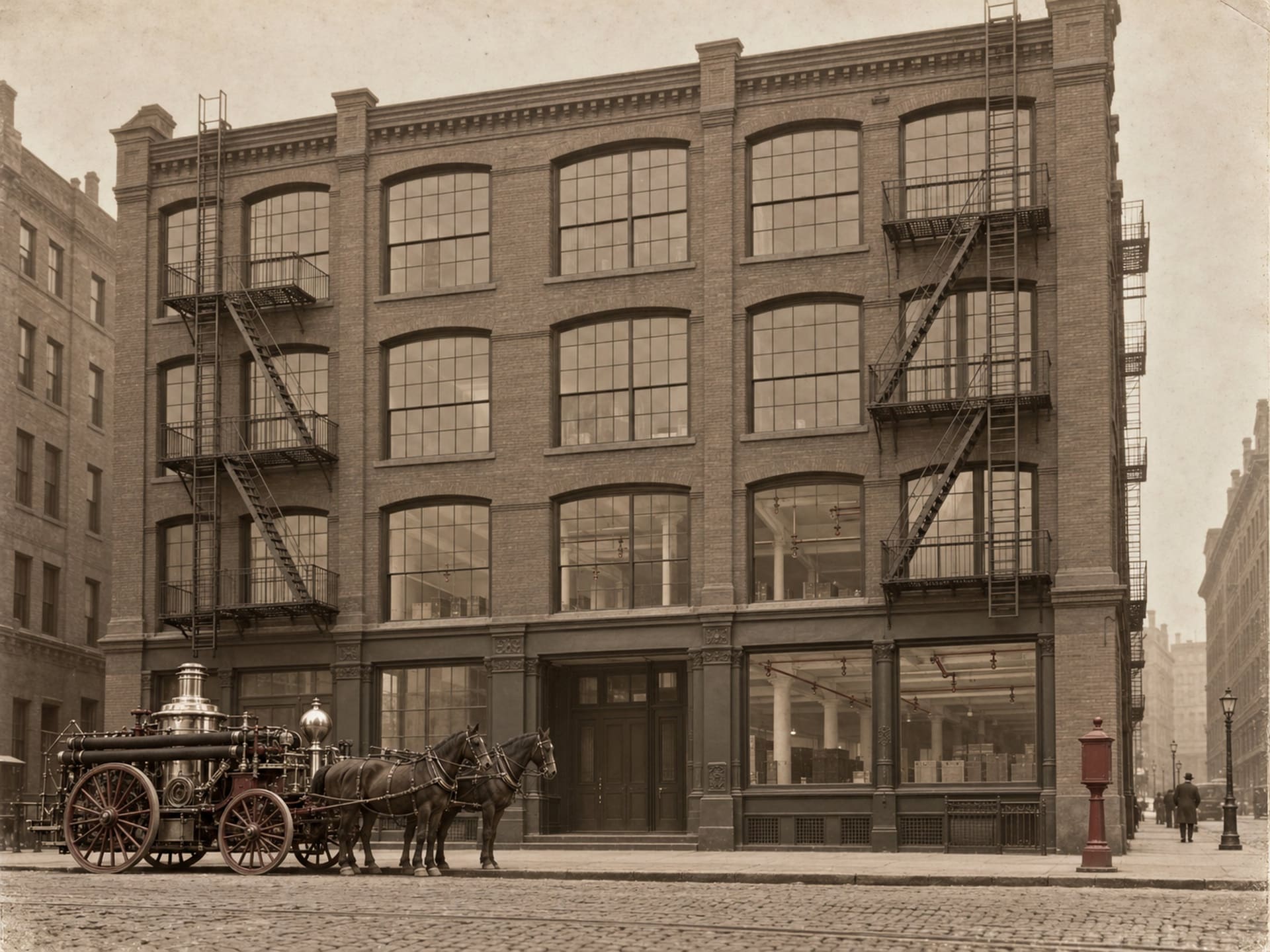
1911:The Triangle Shirtwaist Factory fire
On March 25, 1911, a fire at the Triangle Shirtwaist Factory in the City of New York killed 146 workers. The doors opened inward, the fire escapes were poor and the owners had refused to install sprinklers. New York formed the Factory Investigating Commission that year, and in 1912 the state passed eight of its bills.
Source: New York State Department of Labor (opens in a new tab); Cornell University ILR School (opens in a new tab)
1913:The start of the Life Safety Code
The National Fire Protection Association formed a Committee on Safety to Life to study fires where people died. Its rules for stairs, fire escapes and exits grew into today's Life Safety Code.
Source: Wikipedia (opens in a new tab)
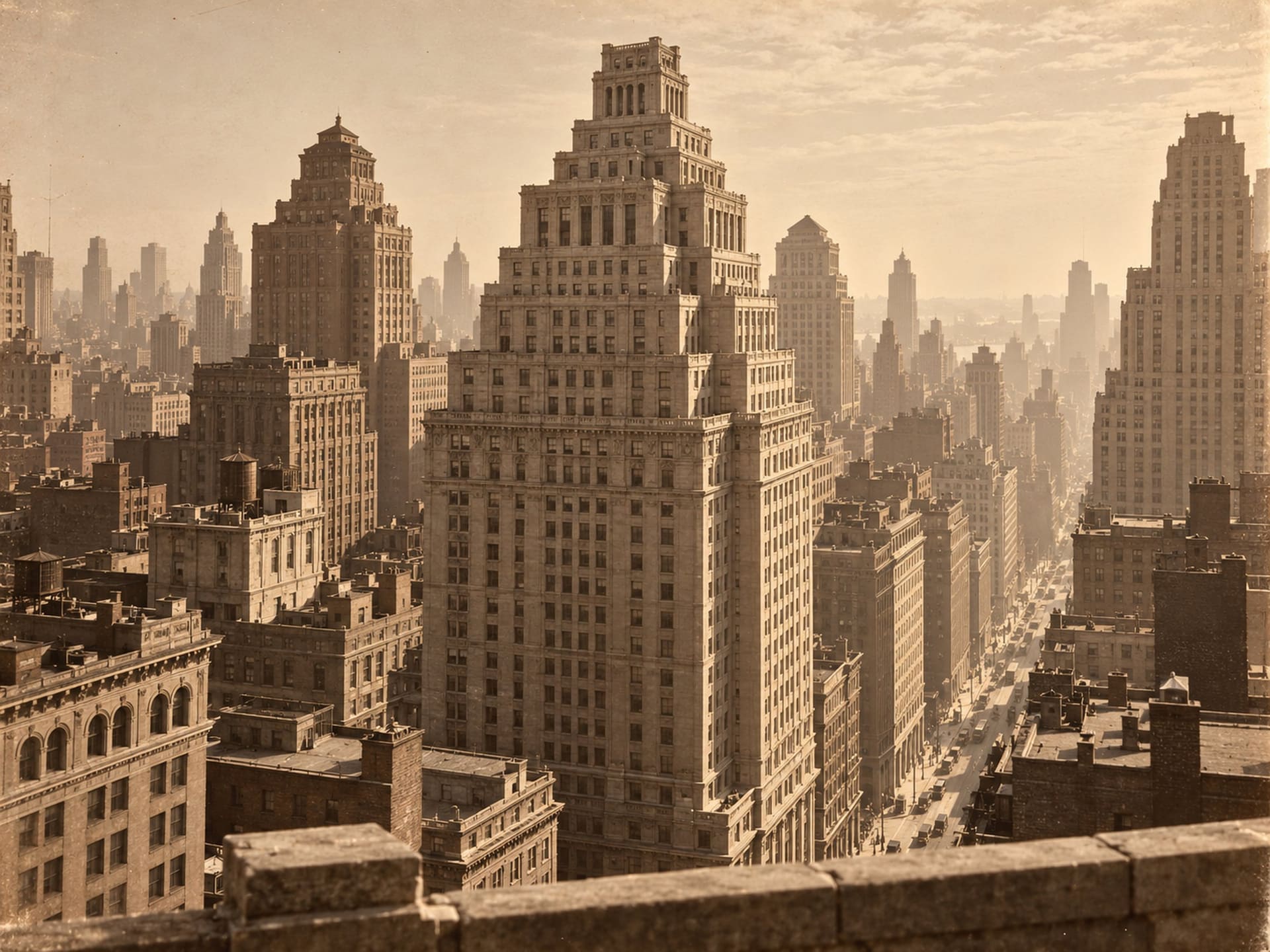
1916:The first comprehensive zoning rules
The City of New York passed the first comprehensive zoning resolution in the country. It was written to stop huge buildings from blocking light and air from the streets, so tall buildings had to step back as they rose.
Source: Department of City Planning, City of New York (opens in a new tab); Wikipedia (opens in a new tab)
1933:Earthquake-safe schools
An earthquake in Long Beach, California destroyed 70 schools. One month later the state passed the Field Act, which requires public schools to be built to resist earthquakes.
1942:Why revolving doors have regular doors beside them
At the Cocoanut Grove nightclub fire in Boston, 492 people died, and the crowd jammed the revolving front door. New rules said a revolving door cannot be the only way out. It must have a regular outward-opening door beside it or panels that fold flat.
Source: Wikipedia (opens in a new tab)
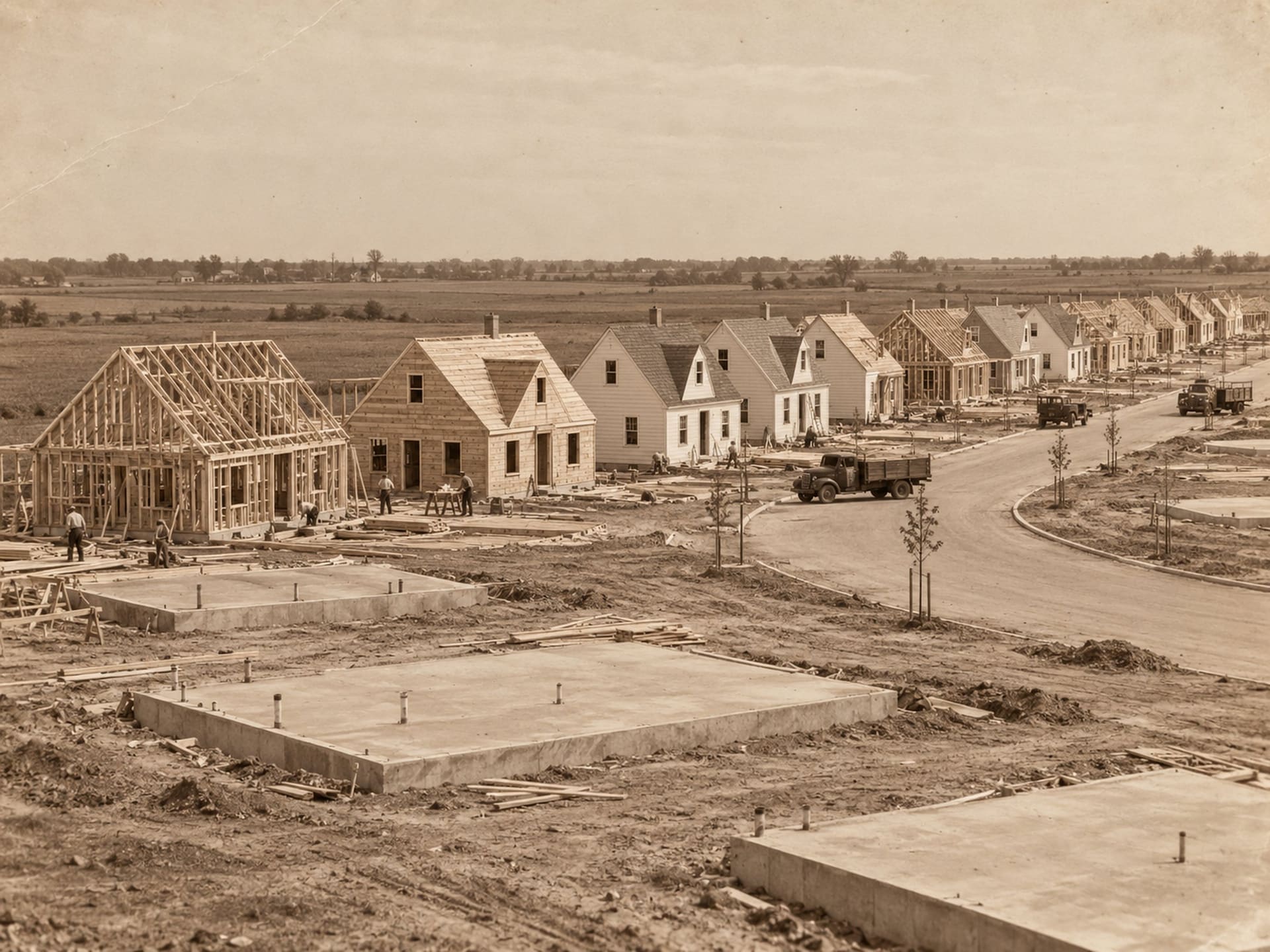
1947:Levittown and the house without a basement
The Town of Hempstead building code said every new home needed a basement. On May 27, 1947, about 800 people, many of them veterans looking for homes, filled a town board hearing, and the board voted to drop the rule. That let Levitt and Sons build homes on concrete slabs with heat in the floor, and the first 2,000 went up in the place later named Levittown.
Source: Journal of Light Construction, citing Newsday (May 28, 1947) (opens in a new tab)
1968:Buildings open to everyone
The Architectural Barriers Act was the first federal law about accessibility. It required buildings paid for by the federal government to be usable by people with disabilities. The Americans with Disabilities Act followed in 1990.
1971:GFCI outlets
The National Electrical Code first required GFCI outlets, which shut off power to help prevent shocks, for outdoor outlets. Bathroom outlets followed in 1975.
1978:Lead paint is banned in homes
The federal government banned lead paint in homes. That is why homes built before 1978 come with a lead paint notice when they are sold or rented.
Source: U.S. Environmental Protection Agency (opens in a new tab)
1979:New York's first energy code
New York's first energy code took effect on January 1, 1979. It set rules for saving energy in the design and construction of every public and private building in the state.
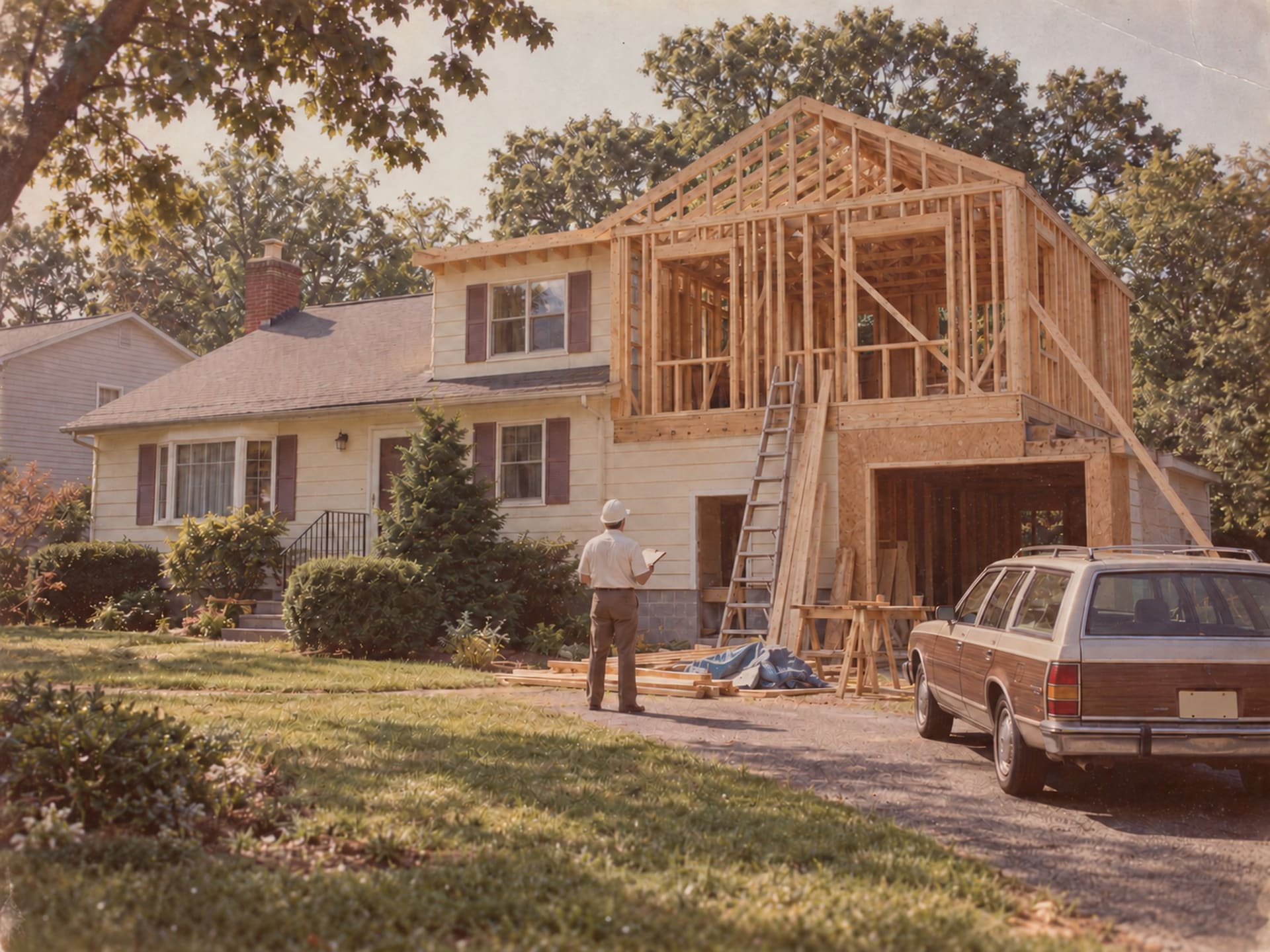
1984:One code for New York State
New York had state building codes from 1951, but they were optional, so each city, town or village chose whether to use one. Some places used other codes and some had no code at all. In 1981 the Legislature said this patchwork left people in danger from fire and made building more costly, so it ordered one code for the whole state. The Uniform Code took effect on January 1, 1984, in every city, town and village except the City of New York, which kept its own code.
Source: New York Department of State (opens in a new tab); New York Executive Law § 371 (opens in a new tab); New York Department of State (1981 law) (opens in a new tab)

2000:The International Building Code
Three groups used to write separate model codes for different parts of the country. In 1994 they joined to form the International Code Council, and in 2000 it published the first International Building Code. Since January 1, 2003, New York's Uniform Code has been based on these codes, with changes for New York.
Source: International Code Council (opens in a new tab); Building Safety Journal (opens in a new tab); New York Department of State (opens in a new tab)
2006:Pool alarms
In New York, every pool installed or substantially changed after December 14, 2006 needs an alarm that sounds when someone enters the water, unless it has an approved automatic safety cover.
2009:Sprinklers in new homes
The model home code began requiring fire sprinklers in new one- and two-family homes and townhouses. As of 2023, only California, Maryland and Washington, D.C. had adopted that rule.
2010:Amanda's Law
Amanda Hansen, 16, died in 2009 from carbon monoxide leaking from a broken boiler while she slept at a friend's house. Amanda's Law took effect on February 22, 2010, and requires carbon monoxide alarms in New York homes with a fuel-burning appliance or an attached garage.
Source: New York State Homes and Community Renewal (opens in a new tab)
2019:10-year smoke alarms
Since April 1, 2019, every smoke alarm sold in New York must have a sealed battery that lasts at least 10 years or be wired into the building.
2021:Wooden skyscrapers
The International Building Code began allowing buildings made of large engineered wood beams and panels, called mass timber, up to 18 stories and 270 feet tall.
2024:Phasing out asbestos
The EPA banned the ongoing uses of chrysotile, the only type of asbestos still used in the United States, with phase-out dates for different industries. The rule does not cover asbestos already in buildings. An earlier ban from 1989 was overturned by a court in 1991.
Source: U.S. Environmental Protection Agency (opens in a new tab)
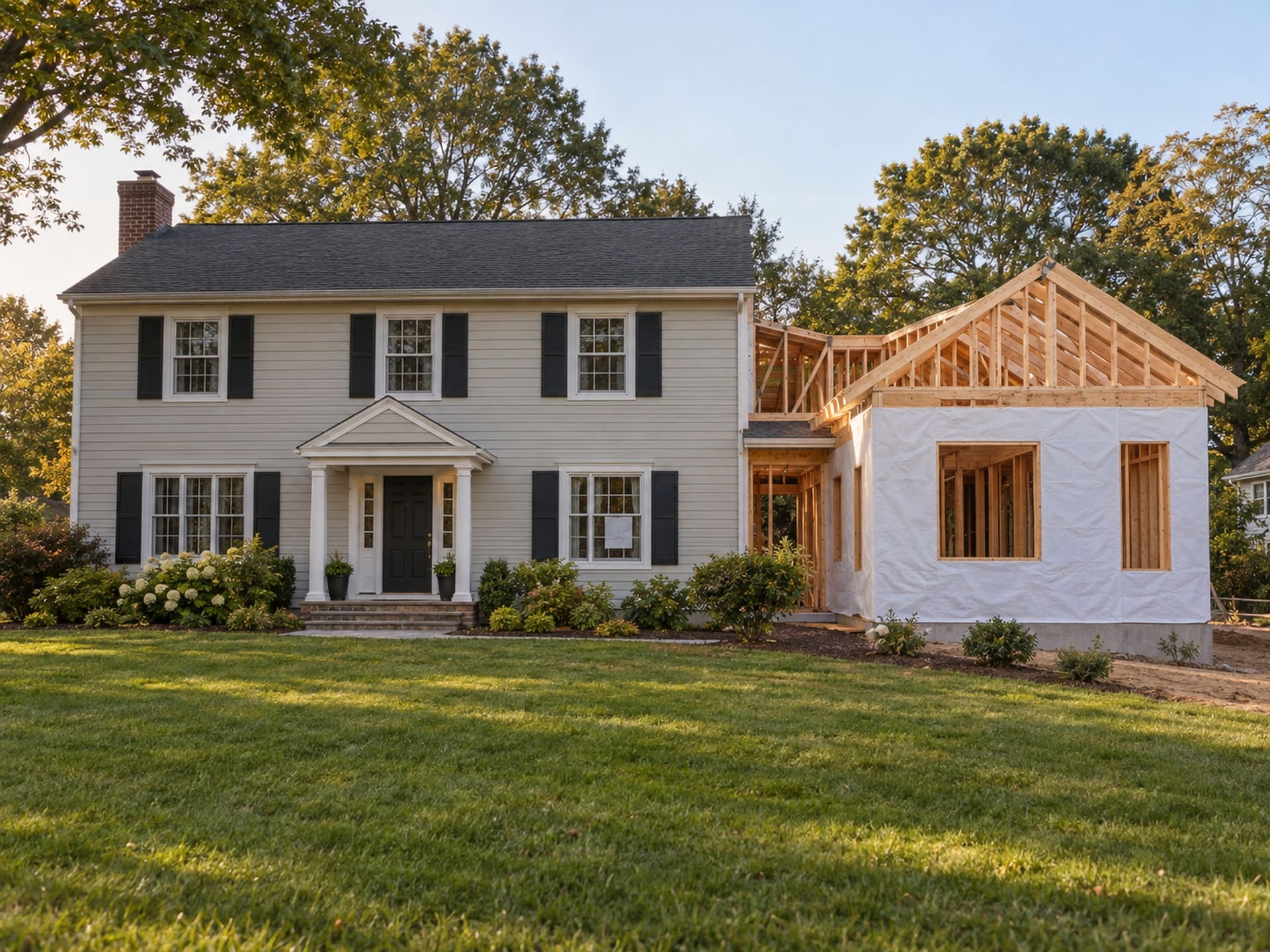
2025:Today's New York codes
The International Code Council publishes new editions every three years so the codes can keep up with new building methods and materials. New York moves to newer editions every few years and keeps its own changes each time. The 2010 update was based on the 2006 codes, the 2016 update on the 2015 codes, and the newest codes, based on the 2024 editions, took effect on December 31, 2025.
Source: International Code Council (opens in a new tab); New York Department of State (code history) (opens in a new tab); New York Department of State (2025 codes) (opens in a new tab)


On the horizon

All-electric new buildings
A 2023 state law will require new buildings to use electric heat, hot water and cooking instead of gas. The state agreed to wait while builders and gas companies challenged it in court, and a federal appeals court upheld the law in June 2026.
Source: Second Circuit decision, New York Department of State (opens in a new tab); Harris Beach Murtha (opens in a new tab)
Parking ready for electric cars
A 2025 state law says the next building code adopted after December 31, 2026 must require new buildings with parking to have spaces ready for electric car chargers, and some chargers too. For houses, the state may require only the wiring.
Source: New York State Senate (bill S801) (opens in a new tab)
3D-printed houses
Some houses are now built by a large machine that prints the walls layer by layer. Since 2021 the model home code has had a section on how to design, build and inspect them.
Source: International Code Council (2021 home code preface) (opens in a new tab)
AI that checks plans
Austin, Texas is testing software that uses artificial intelligence to check plans for new houses against the city's zoning rules. The International Code Council now offers the same software to other cities.
Source: City of Austin (opens in a new tab); International Code Council (opens in a new tab)
Building on the Moon
NASA is working with ICON, a company that 3D-prints houses, on a system that could build landing pads, roads and shelters on the Moon from the Moon's own soil.
Source: NASA (opens in a new tab)